Timothy Berners-Lee, also known as “TimBL” or Sir Timothy Berners-Lee, is an English-born computer science expert. He is famous around the world for being the person who invented the World Wide Web. He has a degree in physics from Oxford University and numerous awards and honors, including the title of Knight and the Order of Merit.
In the 2012 Summer Olympics he participated in the opening ceremony using a NeXT computer. He is involved in a number of causes, including the fight for net neutrality and efforts to make data from the United Kingdom’s government open to the public.
His Life
Born in London, England on June 8, 1955 to Conway Berners-Lee and Mary Lee Woods, Timothy John Berners-Lee is one of four siblings. Both of his parents were mathematicians and computer experts. During his childhood, his parents were employed at Ferranti, where they worked on the world’s first computer made for the commercial market, the Ferranti Mark 1. He received his primary school education at Sheen Mount Primary School and then went on to Emanuel School, a private school in the southwest of London. In 1973 he began attending The Queen’s College, which is part of the University of Oxford, and graduated in 1976 with a first-class honors degree in physics.
After graduating, he worked at a number of places. This included Plessey Telecommunications, his first employer, then D.G. Nash, where he wrote printer software. In 1980 he got a contractor position at the European Organization for Nuclear Research, also known as CERN. While there, he built a system known as ENQUIRE, which was designed to store and link information in an early form of hypertext. He returned to CERN in 1984, and in 1989 he proposed the idea that would evolve into the World Wide Web. In August 1991 the first website came online, and he became known as “the father of the Internet.”
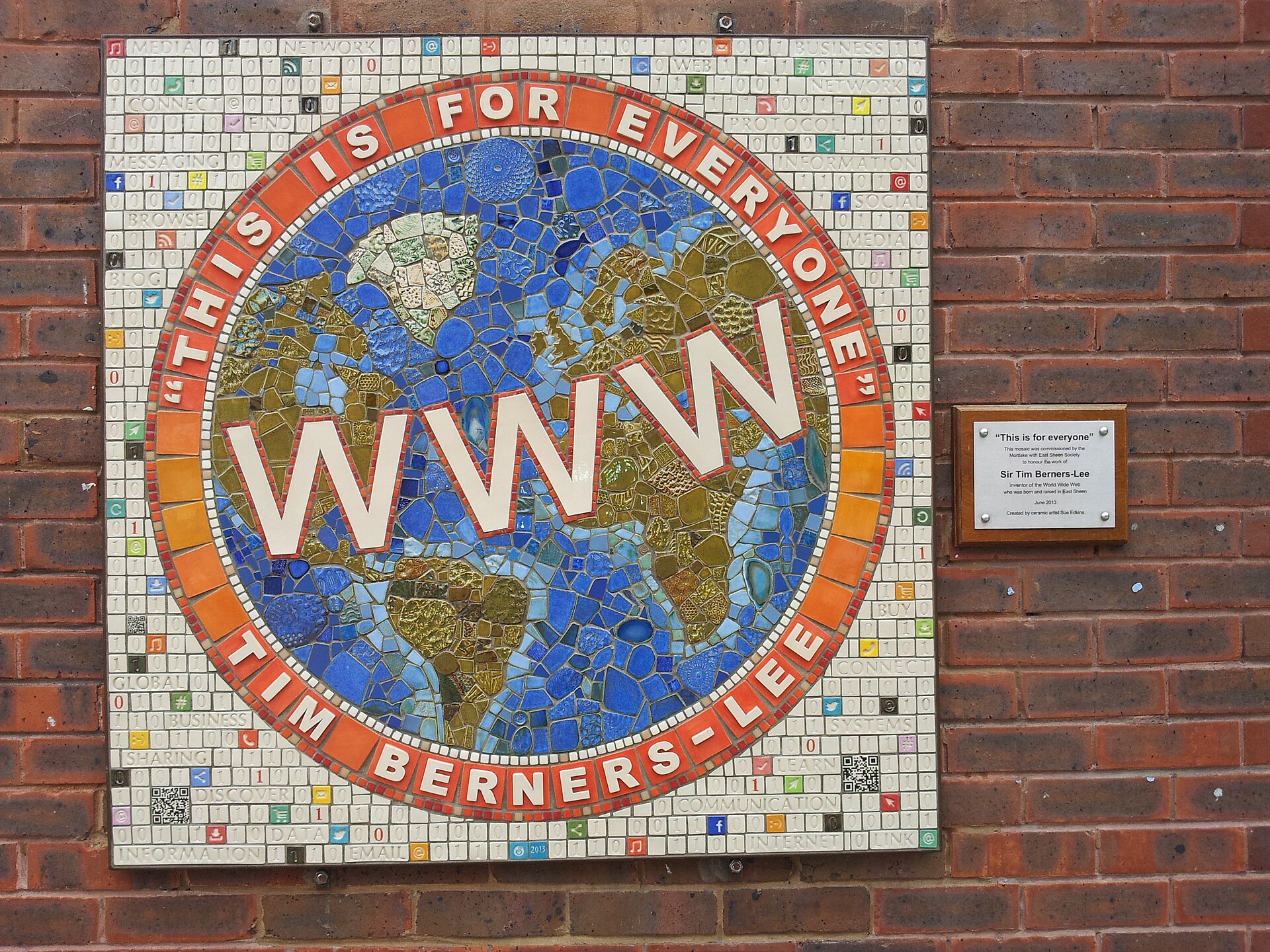
In 2004 he was made Knight Commander of the Order of the British Empire in recognition of his contributions to modern technology and became Sir Timothy Berners-Lee. He also received the Order of Merit in June 2007. At the 2012 Summer Olympics in London, he tweeted the message “This is for everyone” during the opening ceremony. The message was displayed with the help of “pixel paddles” held by over 70,000 audience members in the stadium.
Sir Timothy Berners-Lee lives in the United States. He was at one time a member of the Church of England, but is now a Unitarian Universalist, having joined a Unitarian Universalist church in Boston.
Achievements
In addition to being knighted in 2004, Sir Timothy Berners-Lee has received numerous other awards, honors and commendations. He was inducted into the World Wide Web Hall of Fame in 1994 and received the Software System Award from the Association for Computing Machinery in 1995. He was appointed Officer of the Order of the British Empire (OBE) in 1997, and in 1999 Time magazine named him one of the “100 Most Important People of the 20th Century.”
In 2011 he received the annual Mikhail Gorbachev Award and an honorary Doctor of Science degree from Harvard University. The Internet Society inducted him into the Internet Hall of Fame in 2012, the same year he was invited to take part in the Summer Olympics. He has been elected a Fellow of the Royal Academy of Engineering, the Royal Society of Arts, the American Academy of Arts and Sciences, and the British Computer Society. He has received further honorary degrees from Lancaster University, The Open University, Yale University and the Rensselaer Polytechnic Institute, among others, as well as honorary doctorates from the University of Manchester, the University of St Andrews and the Vrije Universiteit Amsterdam. Most of this is due to the research that led to the invention of the World Wide Web.
Berners-Lee founded the World Wide Web Consortium, also known as W3C, in 1994, and the World Wide Web Foundation in 2009. In the same year, he was elected to the United States National Academy of Sciences. He also co-founded the Open Data Institute, where he became president in 2012. He is a member of the MIT Center for Collective Intelligence and the MIT Computer Science and Artificial Intelligence Laboratory, where he holds the Founders Chair.
First Web Server
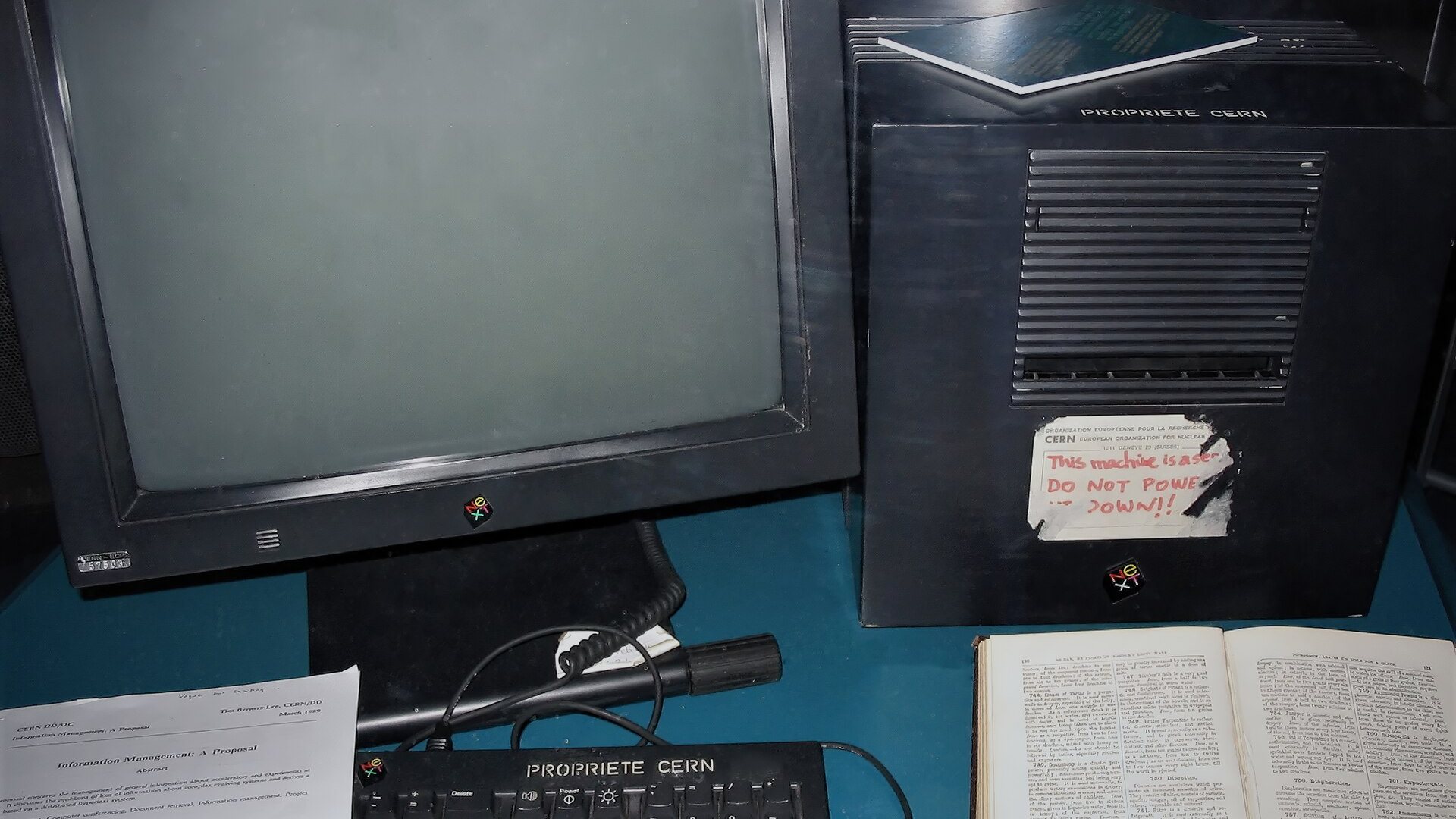
Berners-Lee created the first web server. Dubbed “CERN httpd,” it ran on a NeXT computer with the NeXTSTEP operating system and first came online on December 25, 1990. The server software was written in the C programming language, and version 0.1, released in 1991, was the first public release. The source code was made available via Usenet in the newsgroup alt.hypertext and via File Transfer Protocol (FTP) from CERN.
His Work
Sir Timothy Berners-Lee has been involved in a number of projects. He is part of the Alliance for Affordable Internet, whose goal is to bring Internet access to everyone worldwide. Through the W3C, he has worked on the Semantic Web, a new way for computers to manage and process data. His association with data.gov.uk and the Open Data Institute is an effort to make certain types of data, for instance non-personal government data in the UK, freely and openly available for public use. He also advocates net neutrality, the principle that all Internet service providers should transmit Internet data without discrimination.
Further Reading
- Tim Berners-Lee’s Biography
- BBC History – Tim Berners-Lee (1955–)
- The Semantic Web
- Open Data Institute: Tim Berners-Lee
- Wired – Berners-Lee: World Finally Realizes Web Belongs to No One
- CERN – A Short History of the Web
- Decentralized Information Group (MIT)
- The First World Wide Web Server: The Project
- NSF – Birth of the Commercial Internet
- The Guardian – Government Commits £10m to Open Data Institute
- Time – Network Designer Tim Berners-Lee
Header photo: the first web server at CERN, a NeXT computer © Coolcaesar, CC BY-SA 3.0 (Wikimedia Commons)