
The project environment analysis provides important information for planning and structuring upcoming projects, which is why it is considered an essential tool in project management.
Definition of project environment analysis
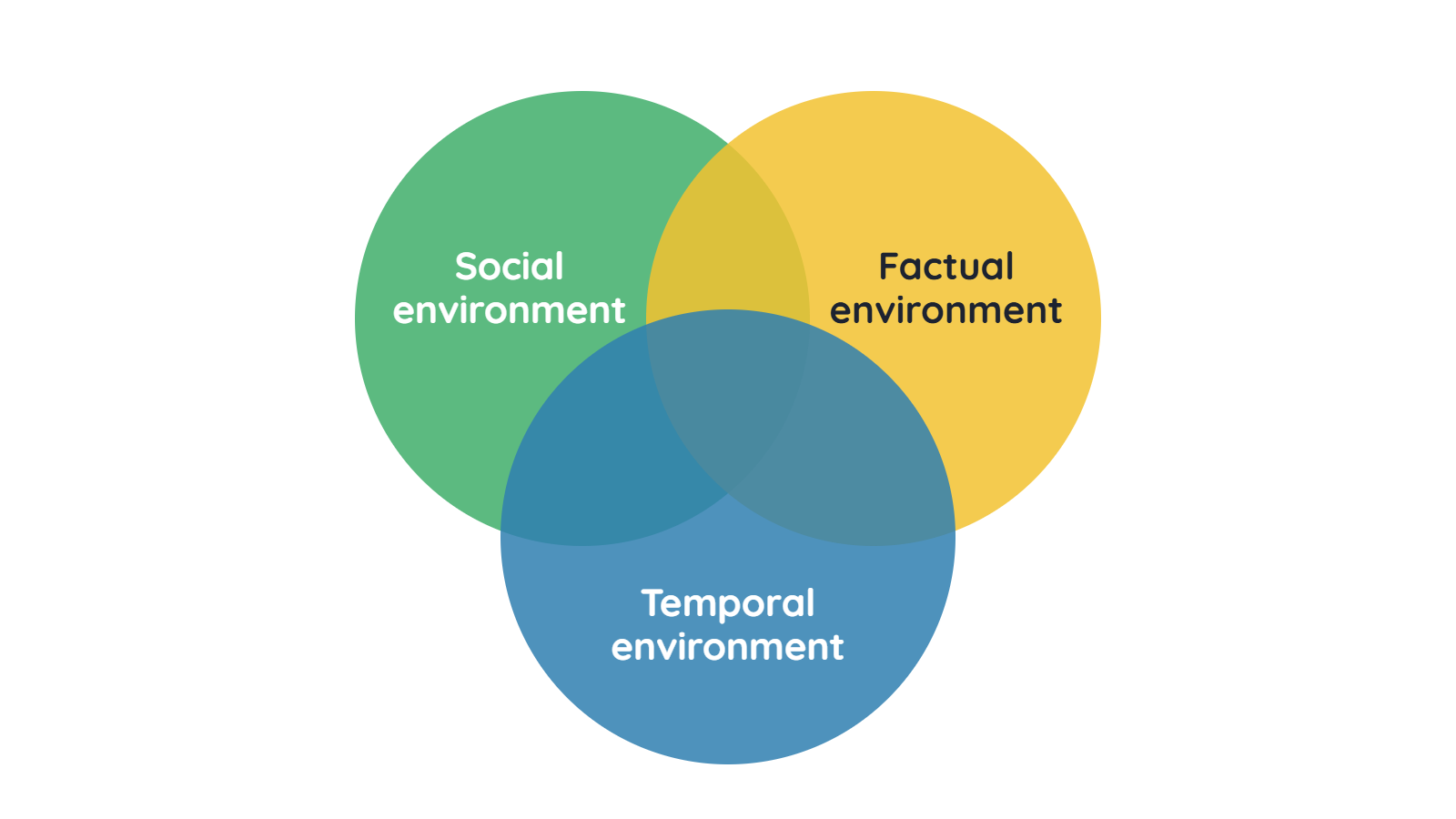
In a project environment analysis, usually someone from project leadership or the project manager examines the context in which an upcoming project will be carried out. It also identifies all internal and external factors that influence the project environment. To capture the environment as a whole, project managers should look at it from three perspectives:
- the temporal environment
- the social environment
- the factual environment.
The project environment analysis provides the basis for structuring the project afterwards (see work breakdown structure), so it should always be carried out before a project starts. Once the project is under way, project managers regularly check whether the findings of the first analysis are still up to date and make adjustments where necessary.
Objectives of the project environment analysis
The project environment analysis pursues several important objectives to lay a solid foundation for project success:
- Identifying all constraints and influencing factors
- Identifying all stakeholders
- Recognizing project risks early
- Developing options for influencing the project environment
- Providing guidance for project planning
How to carry out a project environment analysis
1. Identifying the project environment
The first phase of the analysis focuses on recognizing and understanding the context in which the project will take place. To examine it in detail, the project environment is divided into three perspectives: the social, the temporal and the factual environment.
Social environment
Analyzing the social environment is very similar to a stakeholder analysis, as it focuses on everyone who could or would like to have a significant influence on the project. Here you should consider all internal and external stakeholders as well as their expectations and concerns. These expectations and concerns show to what extent individuals or groups could influence the project. Based on this, you then derive preventive or corrective measures in response to potential difficulties (action plan). Also, do not neglect the relationships between the stakeholders.
A mind map, for example, can be used to analyze the social environment. The upcoming project forms the center of the mind map. The main nodes represent the individuals or groups who are affected by the project or feel affected by it. In further nodes, you can then list the ways in which stakeholders could influence the project, positively or negatively. Red or green arrows add visual clarity: red arrows stand for a hindering influence, green arrows for a positive one.
To understand the purpose of analyzing the social environment, keep in mind that the project objective does not automatically match the objective of each stakeholder. A short example illustrates this:
Let’s assume the objective of a project is to develop a new design bike based on the previous model. Developing this new product is not automatically also the objective of senior management. Rather, senior management’s objective is to increase sales by x % through the new bike model. Senior management may therefore expect the new bike to be launched as quickly as possible to contribute to the increase in sales, and may put pressure on the project team as a result. Once the project manager has recognized this expectation and the possible influence, they should derive preventive measures (in the action plan).
Temporal environment
For the temporal environment, you look at all activities before the start and after the end of the project. It is important to pay particular attention to incidents and circumstances that could affect the project, and to their possible consequences.
- Activities before the start of a project include, for example, the project request, the decision on how the project will be integrated into the organization, the definition of project roles and the selection of project team members. A delay in the project request could postpone the entire project, and the possible consequences should be examined in detail.
- Activities after the end of a project include, for example, further development of the project results and changes in the company’s organizational structure. After the official project closure, team members return to their positions in the line organization and carry out any follow-up tasks in addition to their regular work. The project environment analysis should already examine whether the scope of this follow-up work could trigger a follow-on project because it exceeds the team members’ capacity in their line positions.
Factual environment
In the factual environment, you examine how the project relates to the corporate strategy and to other projects. Address the following key questions:
- Does the project pursue the same strategies and objectives as the company?
- How does the project influence the corporate strategy and the corporate objective?
- Does the project create opportunities or risks for other projects in the company?
- Does it need to be coordinated with other projects?
To illustrate this, let’s return to our bike example:
Let’s assume the company starts another project to develop revolutionary e-bikes. This could create a need for coordination with the design project described above. The new design might also be interesting for the e-bikes, for example, so both project teams should recognize the need for exchange before the projects start and integrate it into their project planning.
2. Developing recommendations for the project
The analysis is followed by an action plan. This plan provides corrective and preventive solutions for the problems identified. In addition, you should derive strategies for minimizing the risk of hindering stakeholder influence and approaches for strengthening the positive influence of certain groups. One example of a risk in the social environment would be public opposition to the project. The action plan records proposed solutions for minimizing this risk. The action plan is a versatile tool in project preparation and is also used in project risk analysis.
In our design project example, the action plan would include, among other things, a strategy for reducing the time pressure coming from senior management. It would also recommend regular exchange meetings with the e-bike project team.
3. Continuously monitoring changing conditions
The project environment analysis is only complete once the project has been successfully completed. Until then, continuously monitoring the project environment is crucial in order to respond to changes early (e.g. changes in legislation, weather conditions for construction projects).
Also interesting:
Another method for analyzing the environment is the SWOT analysis, which looks at the strengths and weaknesses as well as the opportunities and threats of a company or project.